Putting Our Beliefs Through the Fire
Steel that is only hardened can shatter under a sudden blow. Convictions that have never faced a serious objection can do the same.
 M.A. CosgroveReasoning Together
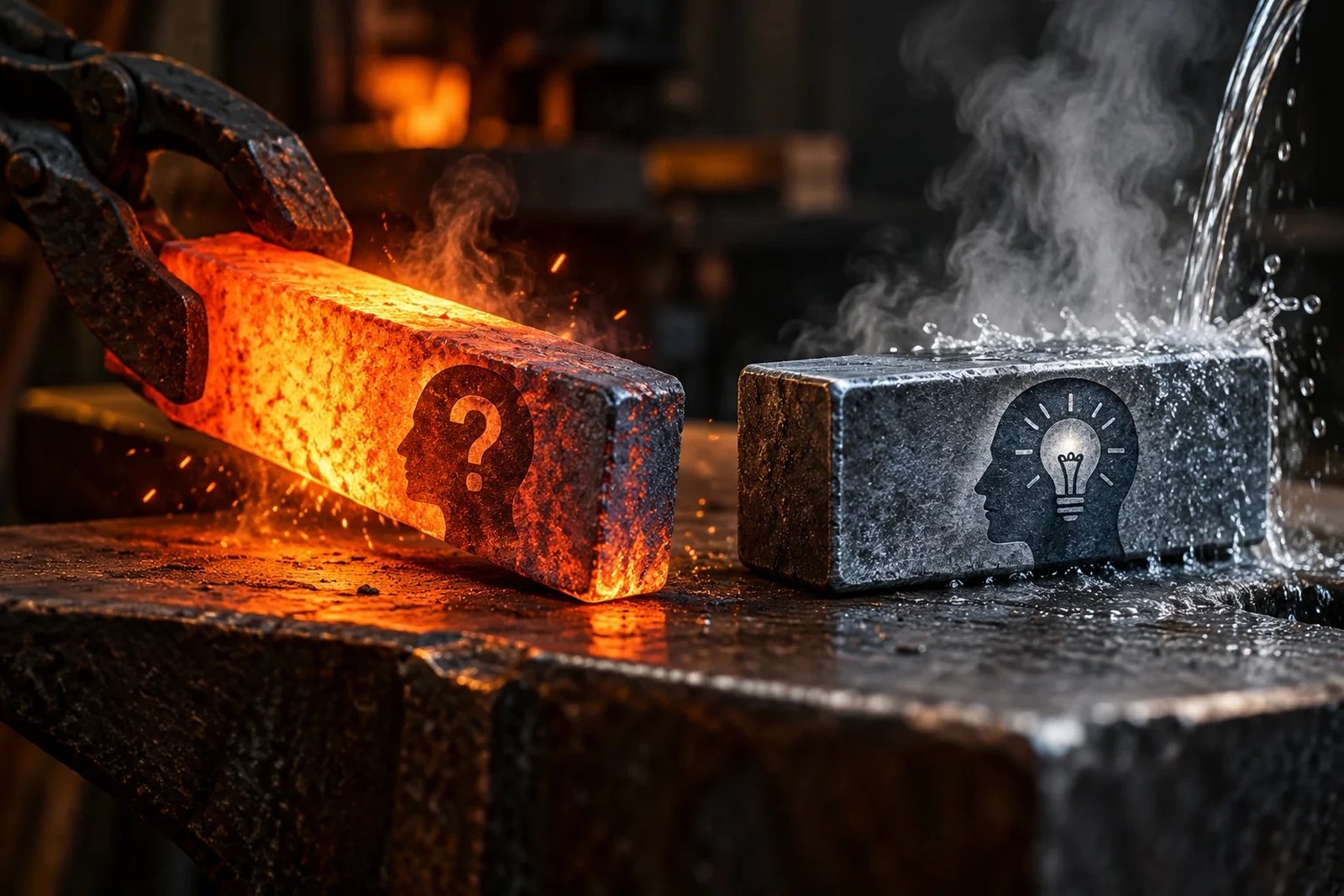
Can we claim to think critically if we refuse to take seriously the arguments against what we believe?
Confidence comes easily when everyone around us agrees. Read the same authors, listen to the same teachers, spend your time with people who share your convictions, and those convictions soon start to feel unassailable. What that proves is debatable. It may mean our beliefs are sound. It may only mean we have become good at answering the objections we already know.
So try this. Find the strongest argument against something you firmly believe, the case a well-informed and intelligent opponent would actually make, and give it the same fair hearing you would want for your own view. Go in prepared to find that you were wrong. If that outcome is off the table, you are not really examining anything.
Hard Is Not the Same as Tough
When I worked in metallurgy, I learned something about steel that has stayed with me.
Steel meant for years of heavy industrial service had to be tough as well as hard, and those are different properties. We heated it to well over a thousand degrees and then quenched it. That changed its internal structure and made it very hard and resistant to wear. It also left the steel brittle and full of internal stress. It could resist deformation and still crack under a sudden blow. A piece of steel could be extremely hard and dangerously fragile at the same time.
The fix seemed backwards at first. We heated the steel again, this time to a lower, carefully controlled temperature. This is called tempering. It relieved the internal stress and traded a little hardness for toughness, the ability to absorb shock and repeated loading without fracturing. Hardness resists being dented or deformed. Toughness absorbs energy without breaking. A material can have plenty of one and little of the other.
I think beliefs work the same way.
A person can hold a conviction very firmly and still understand little about why it should be believed. Years of reinforcement harden it. Every agreeing voice adds certainty, and every contrary voice gets waved away. In time, being right becomes so familiar that the mere possibility of being wrong feels like a threat.
That is intellectual hardness, and like steel that was never tempered, it can hide real fragility. When a serious objection lands, the person gets defensive, angry, or dismissive instead of weighing the argument. The belief stays outwardly intact, but refusing to reconsider something has never been evidence that it is true.
Tempering steel means deliberately giving up some hardness because toughness is what the job requires. Putting our convictions through honest criticism asks the same of us. We may lose some certainty. An argument we thought was decisive may turn out to be weaker than we assumed, or someone we disagreed with may have seen something we missed. Nobody enjoys finding a crack in an opinion they care about.
It Still Has to Pass the Test
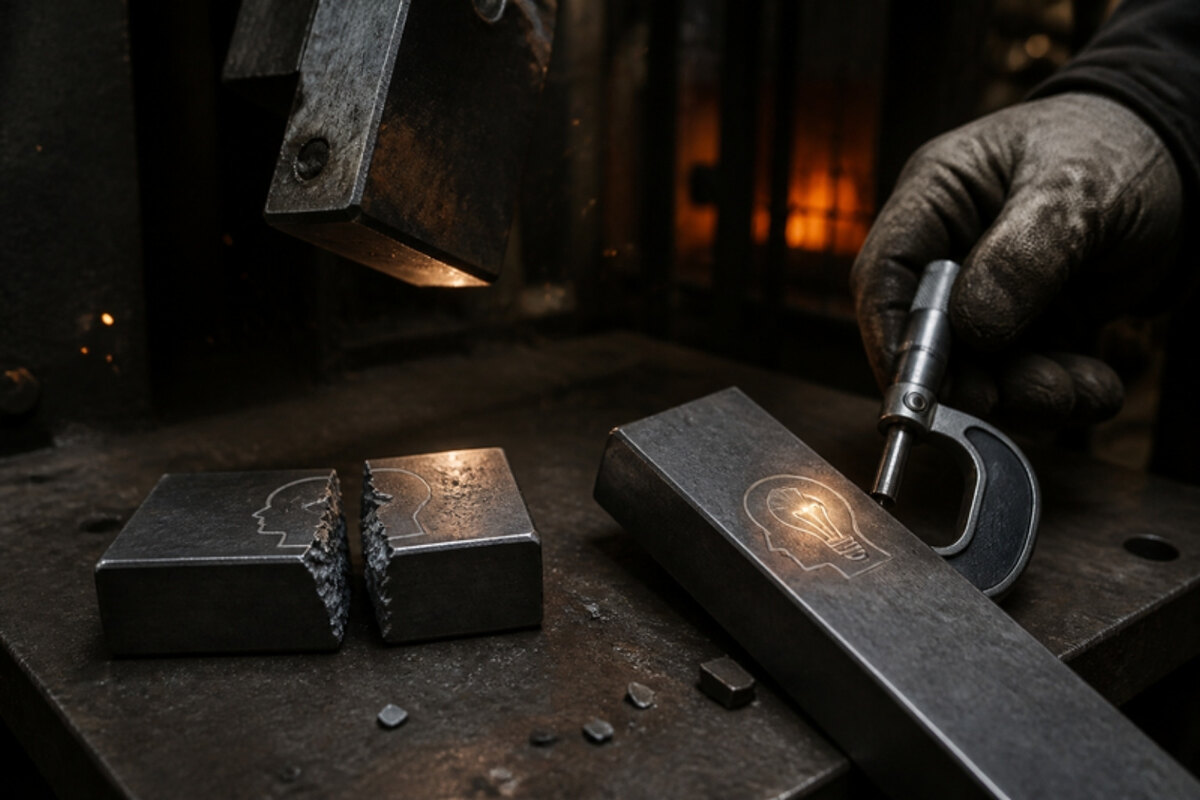
Metallurgy taught me one more thing. You don’t keep a piece of steel because you put time and effort into making it. It still has to meet the requirements of the job it is made for. It goes through hardness tests, impact tests, and inspections, and sometimes it fails. If the defect can’t be corrected, the steel is rejected. No responsible metallurgist would use it anyway because of the work already invested. In some applications the results could be disastrous.
I don’t see why our beliefs should get gentler treatment. We may have held a conviction for thirty years, taught it, built other conclusions on it, even staked our reputation on it. None of that makes it true. It only makes it harder to admit we were mistaken, and that is where intellectual honesty starts to cost something.
Some convictions come out of serious examination stronger than they went in. Some need to be refined or qualified. A few, if the evidence requires it, have to be given up. That last possibility is the one we resist most, especially when a belief has become part of how we see ourselves. Still, I would rather find out I was wrong than spend another thirty years defending the mistake.
The point of examining our beliefs isn’t to get better at defending them. It’s to find out whether they deserve defending at all. A mind tempered by honest examination can hear disagreement, grant a fair objection, and revise a conclusion without coming apart. It has no reason to fear a strong argument from the other side, and it may learn something from one.
Steel Has No Say. We Do.
The comparison has a limit. Steel has no say in whether it is tempered or tested. We do. We can go looking for the arguments that challenge us, or spend our lives steering around them. We can follow the evidence, or decide in advance where it has to lead.
If we have already decided that none of our convictions could be wrong, we are not examining them at all. I would much rather learn that a belief of mine couldn’t survive scrutiny than keep holding it only because I never let it be tested.
Defective steel can look impressive on a shelf. You can polish it, admire it, and tell everyone how strong it is.
I just wouldn’t build a bridge with it.
Get new articles by email
One short email when something new is ready: an article, an episode, a class opening, or a book release. No more than that.
Subscribe
Comments
Comments on this article are now closed. You are always welcome to reply to any of our emails.